Site additions

Zinovoev (Jerzy Kosinski) seriously gets his chow on

For those who check this page with some regularity (and believe me, I know your ranks can be counted upon one hand), it may appear that there’s not much in the way of new material. However, the layout and organization of this site allows for many options beyond a typical listing of entries in chronological order. Some documents from the old blog have been re-posted on here on gammacloud.org and although they may be slightly edited, they are archived according to their original date of publication. Here are the most recent of these additions:

Also, there are now dedicated pages for my list of of-site works as well as a “Recommended Reading” list and an overview of my 12 favorite books.

One of my favorites

My “Life in Music” series is ongoing, featuring mix CD listings and artwork spanning 1973 to 1984. The first installment of my 1985-1987 collection will be uploaded shortly.

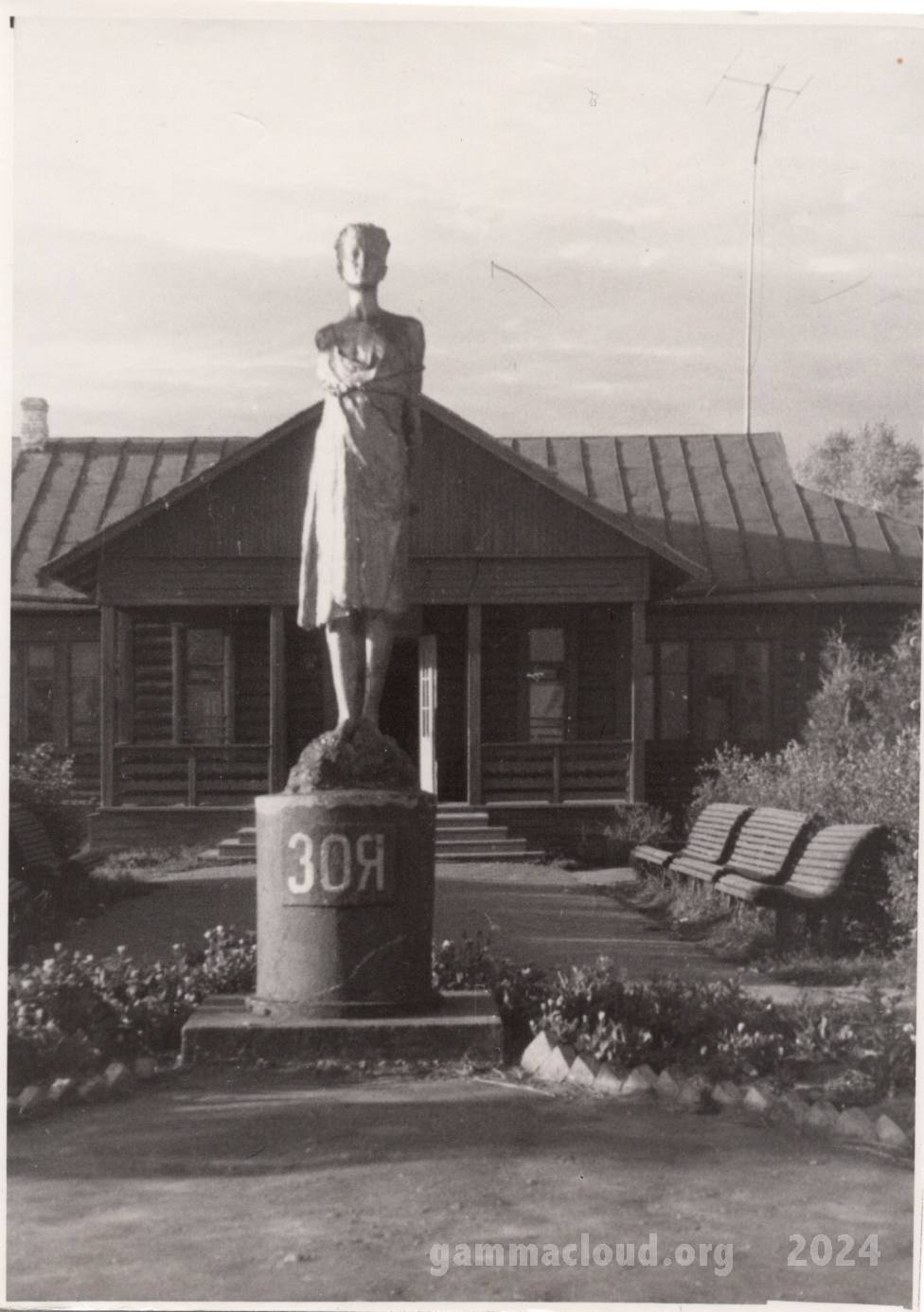
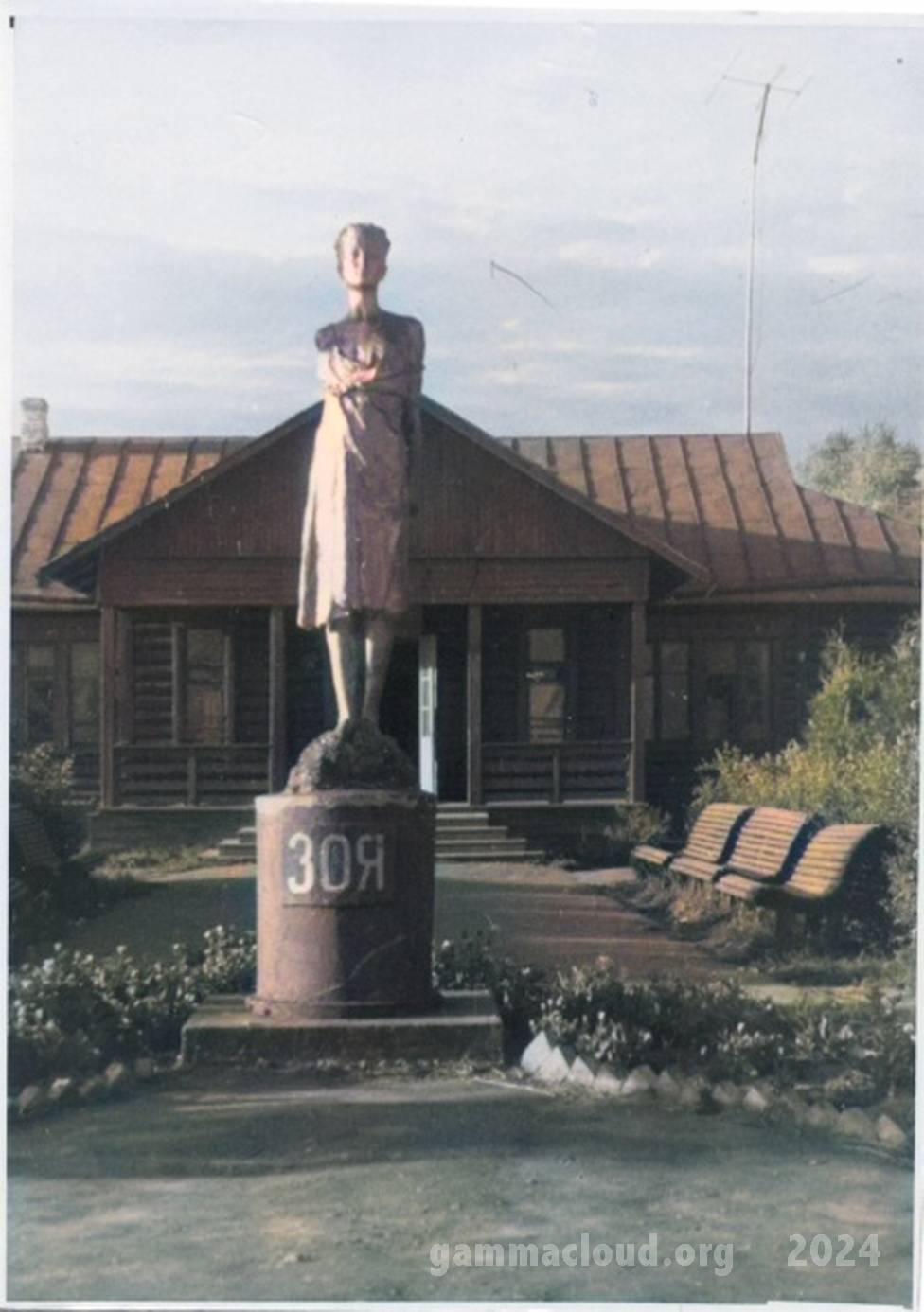
The Zoya Kosmodemyanskaya Archive continues to grow and I have a new pieces of ephemera as well as an original translation of a war-era Pravda article that will be added to the collection shortly.

Finally, I am in the process of creating a “Special Collections” area on the site that will feature rare and somewhat obscure works that are not available anywhere else on the web. More on that another day.

There’s also a page that offers an overview of my other works from around the ‘net to provide a little insight as to how I spend many an evening.

Posted in and so on..., site news | Tagged , | Comments Off

International Women’s Day 2012

International Women’s Day, as described by Alexandra Kollontai, began as “a day of international solidarity, and a day for reviewing the strength and organization of proletarian women.”  Established through the determination of radical activist and organizer Clara Zetkin and a resolution adopted at the International Conference of Working Women the first IWD was marked in 1911.   Today, IWD is commemorated around the world as “a global day celebrating the economic, political and social achievements of women past, present and future.”


Decades before the invasion by fascist Germany, the USSR had the tremendous foresight and vision to place men and women on an equal footing in virtually every walk of life, including military service. Indeed, women like Red Army sniper Lyudmila Pavlichenko (1916-1974) were a tremendous asset to Soviet forces in the battle against the Nazi onslaught and the bane of imperialist aggressors at almost every turn. For her part, Pavlichenko logged a total of almost 309 confirmed kills during her time in action against Hitler’s forces, earning her celebrated spot in history as the greatest female sniper of all time.

In recognition of International Women’s Day 2012, an excerpt from Pavlichenko’s “Message to the American People” (1942) is presented below. I originally transcribed this for the scholarly website Marxists Internet Archive in April 2011 and the complete article is posted in MIA’s Soviet History Archive.

Lyudmila Pavlichenko

I can’t help feeling that the American people are still too indifferent to the war and what it really means. I do not believe the American people as a whole entirely understand what war is like. Most of you so far only feel it as an inconvenience—doing without gasoline, being a little limited in the amount of sugar you use. You do not know what it is to have bombs falling all around you. You do not know what it is to see babies murdered, women and girls ravished by the Hitlerite beasts. You do not know what it is to find the charred bodies of your own comrades burned and tortured beyond recognition, to see rows of brave, fine people—people you knew—hanging along the roadside. You do not know what it is to walk into a home for old people won back from the Germans, as I did on the Sovkhoz Ilyichka, near Odessa. It was early morning, and the sun was just rising, and we went in to set the people there free. But what we found were the bodies of 108 old people, shot and tortured, slashed to pieces, blown up by grenades.

108 people, all of them old and ill. And so depraved are those Hitlerites that the old women had all been raped. Things like this could sometime happen to you if Hitler wins more victories.

[. . .]

In closing I have a special message for American women. I would like them to know first about our mothers. Soviet mothers love their children enormously. I know how much my mother loves me—and yet she writes to me: “I want to see you more than anything—but don’t come home until you come with victory.” And when their sons are killed our mothers do not stop to mourn—they work all the harder. Soviet mothers send their sons to the front, and if necessary their daughters too, without tears in their eyes. They know that it is necessary. While women are not regularly a part of our armed forces, many are fighting in one way or another. There are many, many cases where mothers whose sons are at the front become guerrilla fighters. Our women were on a basis of complete equality long before the war. From the first day of the Revolution full rights were granted the women of Soviet Russia. One of the most important things is that every woman has her own specialty. That is what actually makes them as independent as men. Soviet women have complete self-respect, because their dignity as human beings is fully recognized. Whatever we do, we are honored not just as women, but as individual personalities, as human beings. That is a very big word. Because we can be fully that, we feel no limitations because of our sex. That is why women have so naturally taken their places beside men in this war. We have a tradition, too, to live up to. There was Durova, the Russian woman guerrilla, who fought against Napoleon’s invading armies in 1812, and Dasha Sevastopolskaya who fought in the heroic defense of Sevastopol in 1854-55. So in today’s war our women have carried on these traditions—and added something. The names of many of them have already been immortalized Lisa Chaikina, Tanya (Zoya) Kosmodemianskaya, Maria Baida, Nina Onilova, Valya Phillipova—and scores of others. Our women have proved that we can master machines and technique as well as men can, that we can have as much will and determination as men can, that we can kill our enemies as well as men can. It seems strange to many Americans that women go into battle. They seem to think the war has changed them into some strange kind of creature between a man and a woman. But we are still feminine beings. We can still wear nice clothes and have polished fingernails in the proper time and place. We remain women and human beings as before. The war has made us tougher, that’s all.

Further Reading:
Women and Marxism Subject Archive    marxists.org

Posted in and so on..., marxism, zilch | Tagged , , , , , | Comments Off

Postscript to “Do dogs know they have faces?”

Are not our feelings the most glorious part of our life?  

– Honoré de Balzac, “The Purse” (1823)

Over on ABCNews.com, there’s an article entitled “The Joy of Your Brain…and the Dark Side of Laughter” that touches on some of the questions raised in my previous hodgepodge of an essay, “Do dogs know they have faces?” Included in the article are some preliminary findings by Jaak Panksepp in the area of animal emotions and communication. The piece even features a veiled reference to Thomas Nagel’s work “What Is It Like To be a Bat?”.

There’s still good deal to be done in this field, for sure. Panksepp is a long way off from showing that animals – any animals – have a “cognition pyramid” resembling that which Feliks Mikhailov discussed in his 1976 work Riddle of the Self. The question of emotion is nevertheless firmly rooted in questions of cognition and consciousness, so there are fundamental questions that need to be answered before anyone definitively concludes that rats, dogs and the like can “feel” emotions the way humans do.

Best. Dog. Ever.

Anecdotally, the question is far more nuanced. When our 13 year-old boxer passes away a few years ago, our little dog Stupsi (whom I discussed in my original musings on this subject) was clearly affected by the absence of her longtime pal, not to mention the overabundance of human grief that was swirling about her. It’s fair to say – I suppose – that how we feel about our pets (and how we behave toward them in turn) is what sustains the storied relationship between man and beast.

Posted in and so on..., marxism, materialism | Comments Off

Do dogs know they have faces?

Stupsi "contemplates" her doppelgänger.

A few weeks ago, our 7 year-old daughter Z. posed one of the most insightful questions I’ve ever heard. Cradling our Lhasanese dog Stupsi and staring lovingly into her eyes, Z. asked, “Does Stupsi know she has a face?” Unwittingly, she’d posed a deeply philosophical query so complex that I didn’t have much of an answer for her. Instead, I told her that she had asked a very smart question and I wasn’t even really sure how to answer it. I felt like my reply was something of a cop-out but the fact of the matter was that, I needed to reflect a bit more on the very idea of it: Do dogs know they have faces?

Almost immediately, Z.’s conundrum reminded me of D.E. Harding’s work “On Having No Head,” an essay I’d first read around the age of 17 or so. I was working in a library at the time and in all honesty, I probably spent more time reading books back then as opposed to filing them back on the shelves. I found Harding’s work in The Mind’s I: Fantasies and Reflections on Self And Soul, an anthology of works compiled by Douglas Hofstadter. Indeed, it was the aforementioned essay and Hofstadter’s “Reflections” that followed the piece that would lead to my longstanding affinity for Hofstadter’s work (see another example). And while I still struggle with some of the intricacies of Hofstadter’s writings, he remains one of the most thought-provoking authors I’ve ever encountered and it’s often worth the extra effort to experience his work.

“On Having No Head” is an intriguing piece in which Harding discusses a moment of enlightenment that he once experienced while traveling through the Himalayas:

The best day of my life – my rebirthday, so the speak – was when I found I had no head. This is not a literary gambit, a witticism designed to arouse interest at any cost. I mean it in all seriousness: I have no head.[1]

In total, Harding presents a host of musings in the Cartesian tradition regarding the duality of man’s existence –as both a third party observer of finite surroundings and as an introspective center of being. He continues:

When we observe a couple conversing, we say they see each other, though their faces remain intact and some feet apart, but when I see you your face is all, mine nothing. You are the end of me. Yet…we use the same little word for both operations: and of course, the same word has to mean the same thing! What actually goes on between third persons as such is visual communication – that continuous and self-contained chain of physical processes (involving light waves, eye-lenses, retinas, the visual area of the cortex, and so on) in which the scientist can find no chink where “mind” or “seeing” could be slipped in, or (if it could) would make any difference. True seeing, by contrast, is first person and so, eyeless.[2]

So it’s clear according to Harding that none of us, dogs included, can actually “see” our own faces (if they are, in fact, ever there at all), but what about if a dog – not a person – sees her face in the mirror? Or, what if she is standing face-to-face with another dog? What might she think then?

It’s important to set the framework from humanity’s own relative point of view. Douglas Hofstadter places Harding’s work in the proper perspective to address the original question posed by little Z. In his “Reflections” that follow Harding’s work, Hofstader offers the proposition that self-awareness is the inherent result of life experience and education (although neurological development during early childhood likely plays a crucial role as well), to wit:

As a child I formulated the abstraction “human being” by seeing things outside of me that had something in common – appearance, behavior and so on. That this particular class could then “fold back” on me and engulf me – this realization necessarily comes at a later stage of cognitive development, and must be quite a shocking experience, although probably most of us do not remember it happening.[3]

Effectively, then, the conversation (the one you’re reading now, mind you.) comes full circle as Hofsadter himself presents Z.’s query, albeit with a bit more detail and a craftily implied sense of rhetoric:

Do higher animals have the ability to see themselves as members of a class? Is a dog capable of (wordlessly) thinking the thought. “I bet I look like those dogs over there”?[4]

Ultimately, Hofstadter concludes that “the ability to snap oneself onto others seems to be the exclusive property of members of higher species” (my emphasis) in which rational thought and analysis logic trumps instinct or, as Hofstadter himself stats, “logic overrides intuition.”[5] He refers to Thomas Nagel’s seminal work “What Is It Like To be a Bat?” (a portion of which is also offered in The Mind’s I) which remains one of the fundamental discourses on the so-called “mind-body problem.” Nagel’s essay offers further insight into Z.’s original question:

…If the subjective character of experience is fully comprehensible only from one point of view, then any shift to greater objectivity – that is, less attachment to a specific viewpoint – does not take us nearer to the real nature of the phenomenon: It takes us farther away from it.

In a sense, the seeds of this objection to the reducibility of experience are already detectable in successful cases of reduction; for in discovering sound to be, in reality, a wave phenomenon in air or other media, we leave behind one viewpoint to take up another, and the auditory, human or animal viewpoint that we leave behind remains unreduced. Members of radically different species may both understand the same physical events in objective terms, and this does not require that they understand the phenomenal forms in which those events appear to the senses of members of the other species. Thus it is a condition of their referring to a common reality that their more particular viewpoints are not part of the common reality that they both apprehend. The reduction can succeed only if the species-specific viewpoint is omitted from what is to be reduced.[6]

While Nagel, then, argues that it is not possible for humans to comprehend what it is like to be a bat, one might conclude, in a converse sort of analogy, that dogs cannot comprehend what it is like to be a human. As such, a dog would likely not comprehend anything beyond the relatively narrow parameters of his/or her consciousness and perspective.

Donald Davidson’s 1982 essay, “Rational Animals” makes a careful distinction between thought and belief, categorizing the latter as one of a number of propositional attitudes. Propositional attitudes, Davidson asserts, are hallmarks of the kind of rational thought that distinguishes humans from animals.[7]

We identify thoughts, distinguish between them, describe them for what they are, only as they can be located within a dense network of related beliefs. If we really can intelligibly ascribe single beliefs to a dog, we must be able to imagine how we would decide whether the dog has many other beliefs of the kind necessary for making sense of the first. It seems to me that no matter where we start, we very soon come to beliefs such that we have no idea at all how to tell whether a dog has them, and yet such that without them, our confident first attribution looks shaky.[8]

It’s a sad indictment, I’ll admit; reducing the objects of our collective affections to nothing but “dumb animals.” Make no mistake about it: our dogs (and other pets) think, sense and experience all sorts of things…But they process phenomena differently than we human-types do. While recent research regarding American prairie dogs suggests the possibility of social traits well beyond our current understanding of animal interaction but even with such preliminary findings, present perceptions of animal behavior lie somewhere between sterile epiphenomenalism and fantastical anthropomorphism.

I’ll be the first to admit that it’s emotionally rewarding to ascribe all sorts of feel-good niceties to our furry (and not-so-furry) friends, especially when they bring us so much happiness and relief in our day-to-day lives. When we look into the countenances of our pets and experience such tremendous feelings of unconditional devotion and acceptance, the question of who knows what seems of little consequence.


[1] From D.E. Harding’s “On Having No Head” in Douglas Hofstadter’s compilation The Mind’s I: Fantasies and Reflections on Self and Soul, pp. 23-33.

[2] Ibid.

[3] From Hofstadter’s “Reflections” on Harding’s work.

[4] Ibid.

[5] Ibid.

[6] From D.E. Harding’s “On Having No Head” in Douglas Hofstadter’s compilation The Mind’s I: Fantasies and Reflections on Self and Soul, pp. 391-414.

[7] Similar in concept to the “higher mental functions” elucidated by Vygotsky and others.

[8] From Donald Davidson’s “Rational Animals” in Mind and Cognition: An Anthology, pp. 781-787.

Posted in and so on..., materialism, zilch | Comments Off

Mixtape Mixdown: The End – Music to Ring in the 2012 Armageddon

So it looks like my pal Ryan Zienert of theCDP.net is winding down one of the most innovative concepts in the history of the blogosphere, The Worldwide Mix-Tape Trade series. The theme for The CDP Worldwide Mix-Tape Trade 9 is “The End,” marking the final chapter of a four-year experiment in long distance camaraderie and music appreciation.

My offering for the trade is a CD entitled “The End: Music to Ring in the 2012 Armageddon” and the overall concept is a tongue in cheek nod to the to the end-time hysteria that’s picking up as the proverbial “zero hour” approaches. Some of the references are subtlen and otheres are front and center but I think at the end of it all (pun intended) I’ve assembled a funny, yet mildly spooky compilation of mood music for doomasayers.

Opening the collection is an “audio collage” I created entitled “It Begins.” (Listen to the complete track here.) I made this using GarageBand and a few of samples. Most of the loops are standard GarageBand fare, slightly tweaked using effects and filters. I played the keyboard parts directly into GarageBand and I was going for something that felt like the background music from a vintage episode of Tales From the Darkside. The first spoken word sample is a memorable scene from Night of the Living Dead and the wind effect is from soundbible.com and it’s used via Creative Commons license. The final sample is from an online reading of The Book of  Revelation, 14:1-3 (New American Standard Bible). My wife refuses to listen to this track in its entirety.

The cover art for this CD is from the 15th century woodcut of Vlad the Impaler eating before the impaled corpses of his foes.

Here’s the complete track listing for my mix:

1. “It Begins”  Mike B.
2. “Centuries Of Sin”  Probot
3. “You’ll Be Fine”  The Battle Royale
4. “It’s Coming Down”  Danzig
5. “Theme”   Melvins
6. “The School Of Assassins”  Anti-Flag
7. “Crimes Against Humanity” Sacred Reich
8. “Slipping Away”   Black Sabbath
9. “It All Dies Anyway”   The Gits
10. “Aftershock”   Anthrax
11. “Baby Götterdämmerung”   Monster Magnet
12. “You’re All Gonna Die”   Venom
13. “Still Of The Night”   Quiet Riot
14. “Tonight, This All Is Over”   Chris McCoy And The Gospel
15. “The Final Conflict”   Conflict
16. “Dusty Old Dust (So Long, It’s Been Good To Know You)”  Woody Guthrie
17. “Archangel”   Samhain
18. “END”     Big Audio Dynamite

Posted in and so on... | Tagged , , , , , , , , | Comments Off

On Bakunin, Marx and the lumpenproletariat: part one

In his recent article, “A Master Class in Occupation,” author Chris Hedges  effectively renews a century and a half of controversy between two giants in political economy, Mikhail Bakunin and Karl Marx, discussing their respective influences on the Occupy Wall Street Movement. Leaning decidedly towards the alleged merits of Bakunin, Hedges provides an overview of the rift between the men, emphasizing their differences on what and who to mobilize in the pursuit of revolutionary social change.

The very publication of such work clearly underscores the fact that the Bukharin/Marx feud remains one of the most discussed, analyzed and perpetuated schisms of the radical left to this very day. In the most basic of terms, the split between the two men was the product of a fundamental philosophical difference between the communist and anarchist schools of thought (I say “schools of thought” here as opposed to “revolutionary movements” to emphasize their contributions to the general discourse of method over, say, revolution in action). Of the various points of departure between the two, the conceptual definition of the lumpenproletariat and the political along with the purported political definitions thereof, proved especially contentious.

Marx and Engels first used the term “lumpenproletariat” in their landmark work The German Ideology. Written in 1845-1847, the book presented their materialist concept of history, establishing a foundation for some of their important later works on communism and political economy. Included in the volume was their critical polemic regarding the philosophy of anarchist Max Stirner and his 1844 treatise on individualism, The Unique and His Property.[1]

It was in this context that Marx and Engels touched upon the origins and composition of the lumpenproletariat.

Such are Saint Max’s “own” ideas about the bourgeoisie and the proletariat. But since with these imaginations about liberalism, good burghers and vagabonds he, of course, gets nowhere, he finds himself compelled in order to make the transition to communism to bring in the actual, ordinary bourgeois and proletarians insofar as he knows about them from hearsay. This occurs on pages 151 and 152, where the lumpen-proletariat becomes transformed into “workers”, into ordinary proletarians, while the bourgeois “in course of time” undergoes “occasionally” a series of “various transformations” and “manifold refractions”. In one line we read: “The propertied rule”, i.e., the profane bourgeois; six lines later we read: “The citizen is what he is by the grace of the state”, i.e., the holy bourgeois; yet another six lines later: “The state is the status of the middle class”, i.e., the profane bourgeois; this is then explained by saying that “the state gives the propertied” “their property in feudal possession” and that the “money and property” of the “capitalists”, i.e., the holy bourgeois, Is such “state property” transferred by the state to “feudal possession”. Finally, this omnipotent state is again transformed into the “state of the propertied”, i.e., of the profane bourgeois, which is in accord with a later passage: “Owing to the revolution the bourgeoisie became omnipotent” (p. 156). Even Saint Max would never have been able to achieve these “heart-rending” and “horrible” contradictions — at any rate, he would never have dared to promulgate them — had he not had the assistance of the German word “Bürger”, which he can interpret at will as “citoyen” or as bourgeois” or as the German “good burgher”.[2]

In 1848, Marx and Engels expounded upon the origins and nature of the lumpenproletariat in Chapter One of The Communist Manifesto:

The “dangerous class”, the social scum, that passively rotting mass thrown off by the lowest layers of the old society, may, here and there, be swept into the movement by a proletarian revolution; its conditions of life, however, prepare it far more for the part of a bribed tool of reactionary intrigue.[3]

It is most important to note that Marx did not necessarily have an axe to grind with the working poor or poorer classes in general but instead with specific elements who might undermine or actively oppose the efforts and objectives of a radicalized working class, Bakunin , instead, asserted an almost unconditional faith in the lumpenproletariat’s alleged value to the movement. In her 2003 essay “The Philosophical Roots of the Marx-Bakunin Conflict,” Ann Roberts summarized the difference of opinion thusly:

Both [Bukharin and Marx] agreed that the proletariat would play a key role, but for Marx the proletariat was the exclusive, leading revolutionary agent while Bakunin entertained the possibility that the peasants and even the lumpenproletariat (the unemployed, common criminals, etc.) could rise to the occasion. Bakunin argued, for example, that the peasants were a revolutionary class for three reasons: (1) They have retained “the simple, robust temperament and the energy germane to the folk nature.” (2) They work with their hands and despise privilege. And (3) as toilers they have common interests with workers.55 In other words, being close to nature, the peasants are less alienated from their true, natural essence since they have suffered less corruption by the evils of society.[4]

Mikhail Bakunin

Indeed, in his 1872 book Marxism, Freedom and the State, Bakunin fully articulated his position on the distinctions between the workers and the lumpenproletariat , effectively presenting the latter as the prospective salvation of the revolutionary movement, implicitly opposing an ostensible imminent calcification of the proletariat at its highest stratum.

To me, however, the flower of the proletariat does not mean, as it does to the Marxians, the upper layer, the most civilized and comfortably off in the working world, that layer of semi-bourgeois workers, which is precisely the class the Marxians want to use to constitute their fourth governing class, and which is really capable of forming one if things are not set to rights in the interests of the great mass of the proletariat; for with its relative comfort and semi-bourgeois position, this upper layer of workers is unfortunately only too deeply penetrated with all the political and social prejudices and all the narrow aspirations and pretensions of the bourgeois. It can be truly said that this upper layer is the least socialist, the most individualist in all the proletariat.

By the flower of the proletariat, I mean above all, that great mass, those millions of non-civilized, disinherited, wretched and illiterates whom Messrs. Engels and Marx mean to subject to the paternal regime of a very strong government…Without doubt, this will be for their own salvation, as of course all governments, as is well known, have been established solely in ‘the interests of the masses themselves. By the flower of the proletariat I mean precisely that eternal “meat” for governments, that great rabble of the people ordinarily designated by Messrs. Marx and Engels by the phrase at once picturesque and contemptuous of “lumpenproletariat”, the “riff–raff”, that rabble which, being very nearly unpolluted by all bourgeois civilization carries in its heart, in its aspirations, in all necessities and the miseries of its collective position, all the germs of the Socialism of the future, and which alone is powerful enough to-day to inaugurate the Social Revolution and bring it to triumph.[5]

But while Bakunin’s unflagging support for the lumpenproletariat is often hailed as an optimistic assessment of the dispossessed and disaffected, his critique of the Marxist assessment of the lumpenproletariat is rather one-sided and idealistic. Moreover, it is inaccurately juxtaposed with the communist experience in China. Forthcoming installments in this series will address the aforementioned problems of Bakunin’s position on these and other matters.


[1]  Der Einzige und sein Eigentum, also translated as The Individual and His Property.

[2] From The German Ideology by Marx & Engels.

[3] From The Communist Manifesto by Marx and Engels.

Posted in economics, marxism, materialism, social sciences | Comments Off

An annotated look at Mike’s side of the bedroom

If anyone ever needed proof that my wife is a saint, look no further than our bedroom. Over the course of the past several years, I’ve slowly built a motif on my side of the bed that can only be described as a “Frida Kahlo’s deathbed” vibe. The area combines some specimens from my collection of Soviet memorabilia as well as rare books and an assortment of other icons and objects. These items are usually the last things I see each night and the first thing I see every morning. Here’s a rundown of the scene:

1.         “Love” by Roy Craft, transcribed and given to me by Thomai.

2.         Print of a boxer dog holding a cat (original painting by Leo Hong Mao), dated 2002; signed 2004.

3.         Bas relief of Prometheus.

"I am a petrel" print, dated approx. 1973.

4.         Print of Chinese Cultural Revolution-era poster entitled, “I am a petrel (seabird).”

5.         Stalin era picture postcard from the Lenin Museum in Moscow, dated 1949.

6.         Quotations of Chou En-lai (1967), Quotations from Chairman Mao (second ed., 1967), Marxism and the World Today by Mansoor Hekmat (1995 ed.) and other books.

7.         The Wandering Jew by Eugène Sue, vols. I and II (A.L. Burt Company ed., 1900) and The Study of Dante by John Addington Symonds (1899).

8.         Che Guevara portrait.

9.          San La Muerte (Saint Death) statuette.

10.         Selected Works of Marx and Engels (single volume edition, 1968).

11.         Rare and antiquarian books, including two 19th century editions of Night Thoughts by Edward Young; a pre-revolution French edition of Night Thoughts (1769); Gitanjali by Rabindranath Tagore (1914) and Selected Works of Voltairine De Cleyre (original edition as published by Emma Goldman’s Mother Earth Publishing Association, 1914).

12.         Cultural Revolution era portrait of Mao.

13.         Zoya Kosmodemyanskaya portrait card, dated mid to late 1940s.

14.         Small aluminum bust of Zoya Kosmodemyanskaya, dated mid 1960s.

Voltairine De Cleyre

15.         “Mao at Anyuan” print.

16.         Replica of monument to the heroes of Krasnodon.

17.         Soviet picture post card – possibly depicting Sasha Filippov – likely dated mid 1960s.

18.         Saint Alexander Nevsky icon. In 2008, following a lengthy series of presentations and several rounds of voting by hundreds of thousands of Russian citizens, The Russian television show Name of Russia named Alexander Nevsky the most notable person in Russian history. Joseph Stalin placed a close third.

19.         Theotokos of Vladimir icon. At the height of the Nazi invasion of the USSR ad the Germans approached Moscow, Stalin is said to have ordered the original icon – the most venerated icon of the Russian Orthodox Church – loaded into a plane and flown around the city’s airspace nonstop in an effort to ward off the fascist hordes.

20.         Selected Works of V.I. Lenin in Three Volumes, (1975).

21.         Selected Works of Marx and Engels in Two Volumes (1962).

22.         Capital, Volume I (Charles H. Kerr edition, 1919).

23.         History of the Communist Party of the Soviet Union (Short Course) (1939).

24.         Selected Works of Mao Tse-tung, vols. I through V (1965).

25.         Problems of Leninism by J.V. Stalin, (1940).

26.         A History of the USSR, vols. I through III (1947).

Dated between 1946 and 1953, this poster, captioned "Long live the great invincible banner of Marx-Engels-Lenin-Stalin!" is the basis for the print on my side of the bed.

27.         Frida Kahlo plush doll.

28.         Karl Marx “Little Thinker” plush doll.

29.         Original, Soviet-era print of Marx, Engels, Lenin and Stalin, dated between 1946 and 1955. The frame appears to be hand made with a crudely cut mat and jagged wood supports secured to the back. The back seems as if it had a good deal of dirt and mud on it in years past, as it was likely stored in a cellar or barn in the decades following the first wave of “de-Stalinization” in the USSR.

Posted in and so on..., marxism | Tagged , , , , , , , , , , , , , , , | Comments Off